

The temper was constructive yesterday on the newest version of the Liste artwork honest, which can also be its largest up to now. Most of the galleries The Artwork Newspaper spoke to for our choice under had bought out or almost bought out their stands by Wednesday afternoon. “Liste is supposed to carry new faces, new galleries and new artist positions to the honest,” says the honest’s director Nikola Dietrich. “The nice factor with an artwork honest like ours is that you could actually herald one week all these totally different artwork scenes and artwork contexts so shut collectively,” she provides. “It at all times creates very nice dialogues for everybody to see.”
Francesca Facciola
Alpha C: Mackenzie, Searching (2026)
Lodovico Corsini
On this sequence, the New York-based artist Francesca Facciola explores household constructions and different types of collective id to look at the darker dimensions of the human psyche. To develop her solid of fantastical figures, Facciola levels performances with associates embodying the characters that later seem in her work. She movies these encounters, transforms them into 3D digital fashions after which paints from the ensuing imagery. Motifs impressed by Scottish clan tartans recur all through the sequence, reinforcing its investigation of lineage, belonging and inherited id.
İrem Tok, L’Origine du Monde (2026), Pilot Galeri
David Owens
İrem Tok
L’Origine du Monde (2026)
Pilot Galeri
İrem Tok creates intricate micro-worlds from carved-out books, revealing hidden inside narratives. By remodeling volumes designed to organise and outline data, the artist interrogates modern notions of fact and authority. L’Origine du Monde (2026) contains hollowed encyclopaedias containing miniature nude feminine figures and pure supplies between layers of plexiglass. Scenes of girls operating by forests lend the work a way of freedom, whereas its title references Gustave Courbet’s notorious portray of a vulva.
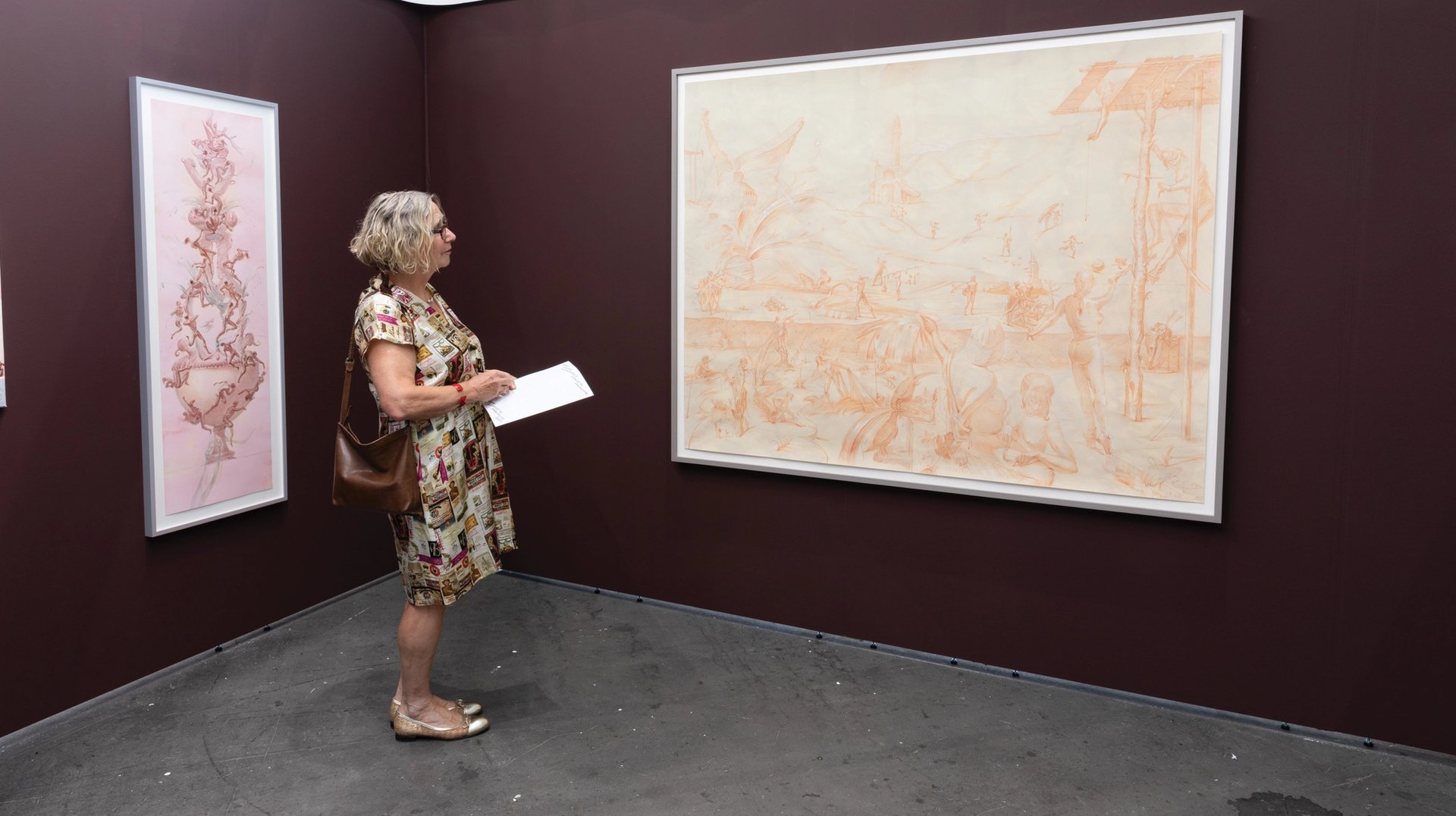
Alex Bodea, Bathers of River Diana (2025), Lutnița David Owens
Alex Bodea
Bathers of River Diana (2025)
Lutnița
Lutnița is the primary gallery from Malta to current work at Liste. Alex Bodea’s large-scale drawing—made utilizing the standard Renaissance medium of blood-red chalk—reimagines Domenico Passignano’s homoerotic Bathers at San Niccolò (1600), changing the nude males with ladies. There’s one very important distinction: a lot of the ladies usually are not at leisure however enduring arduous labour. “This can be a metaphor: it’s a lot more durable for them to get the identical outcomes as males,” Bodea explains. The work is obtainable at SFr12,000.
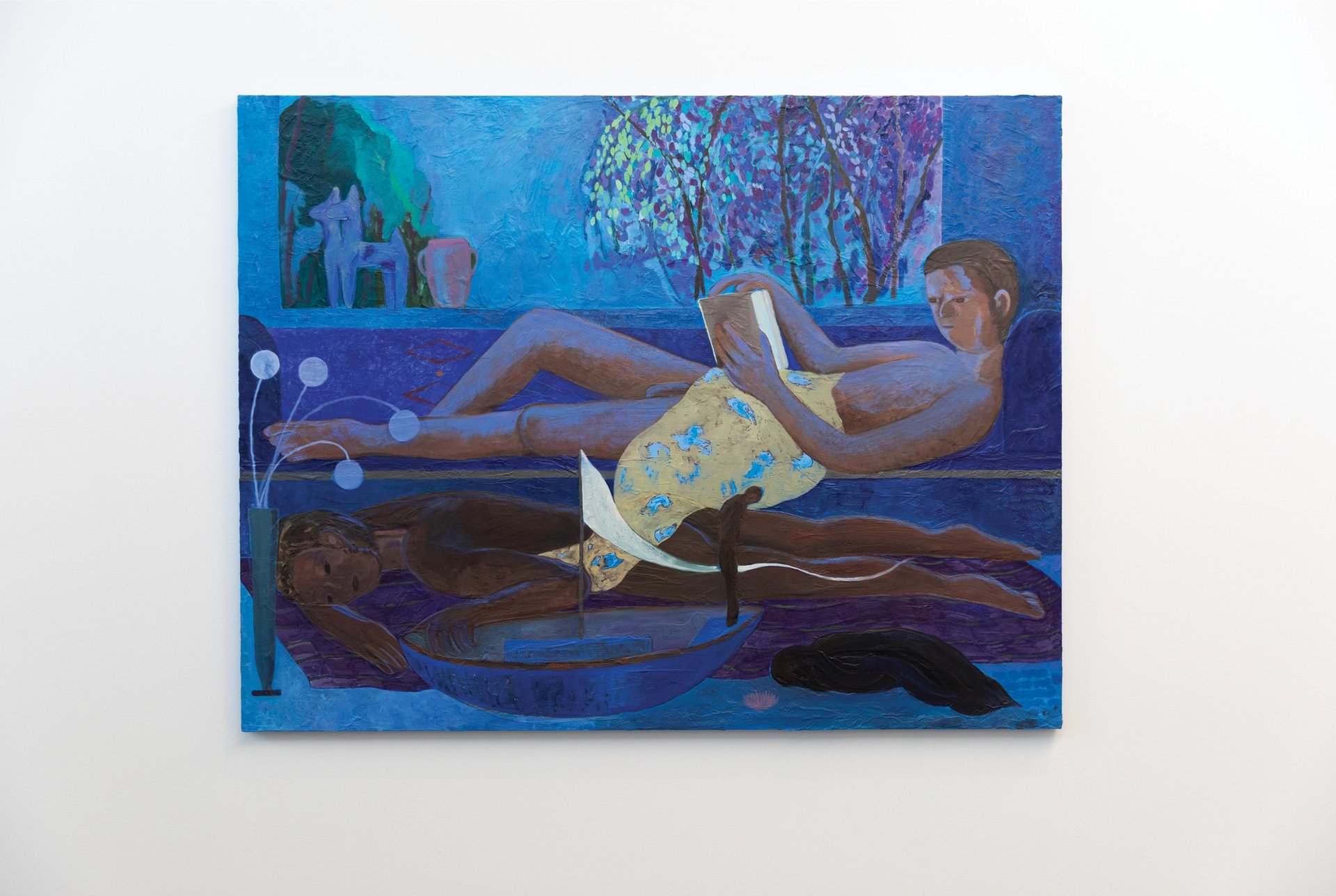
Mackerel Safranski, The Blue Room and his Origins (2026), A-Lounge Up to date David Owens
Mackerel Safranski
The Blue Room and his Origins (2026)
A-Lounge Up to date
The Korean artist Mackerel Safranski has no formal artwork schooling, explains Min Lee, A-Lounge’s founder and government director. She started drawing as remedy for an consuming dysfunction and “her ideas about her physique form are mirrored on this work”, Lee continues. One other overarching theme is reincarnation: the jar within the portray is replicated as a sculpture within the stand, nodding to the truth that “in Korea, when individuals are useless, we [would traditionally bury them with] issues that they are going to want within the subsequent life”. Offered for SFr6,700.
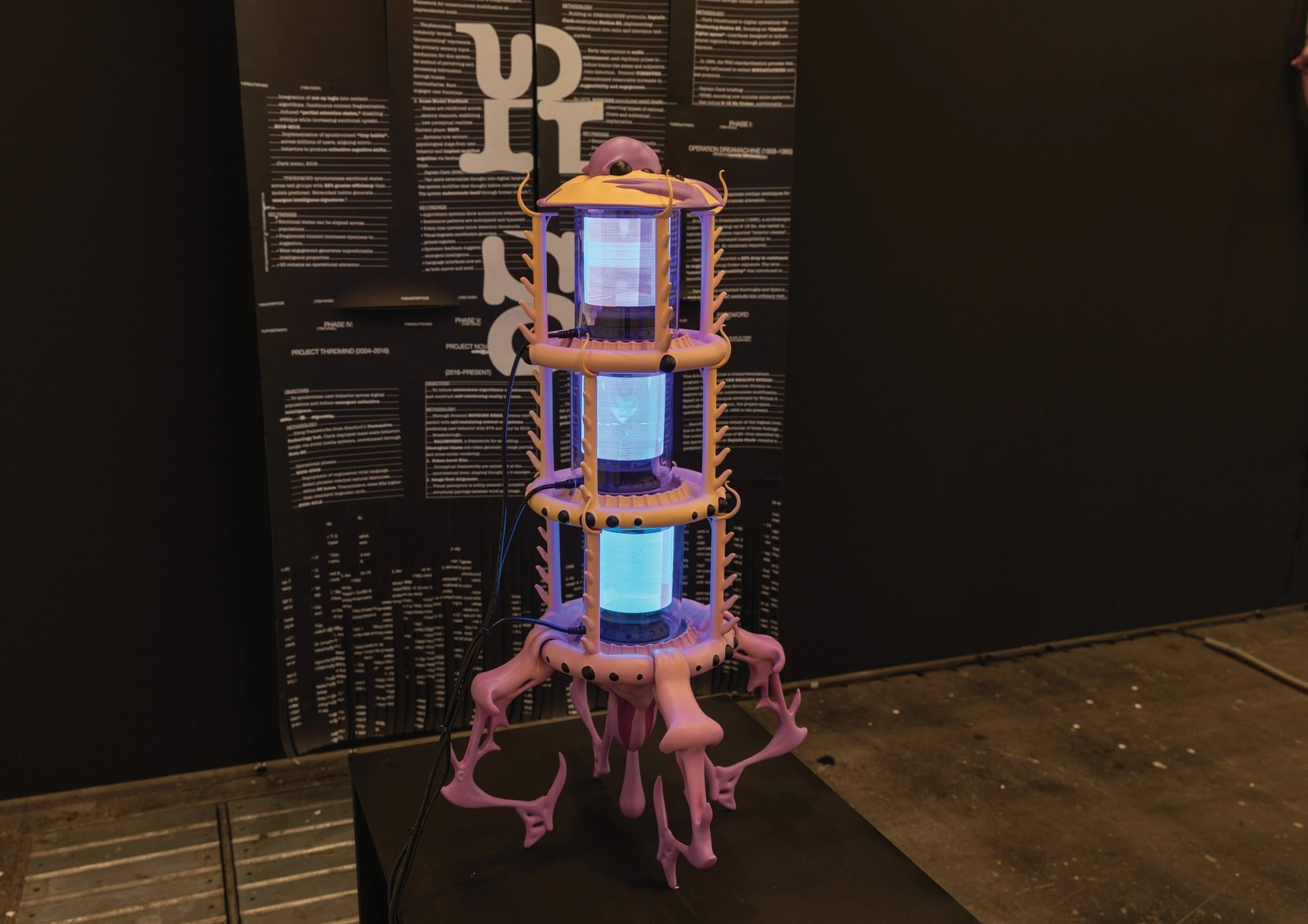
Brandon Tay, DOOMSCROLL DREAMACHINE (2025), Yeo Workshop David Owens
Brandon Tay
DOOMSCROLL DREAMACHINE (2025)
Yeo Workshop
The Singaporean artist Brandon Tay, now residing in Shanghai, examines the methods digital applied sciences form unconscious thought and affect behaviour past the display screen. On this sculpture, he reworks a stroboscopic gentle to show an infinite scrolling loop of data drawn from social media platforms like Instagram and TikTok. Tay attracts connections between social media and hypnosis, asking whether or not time spent on-line can contribute to altered states of thoughts.
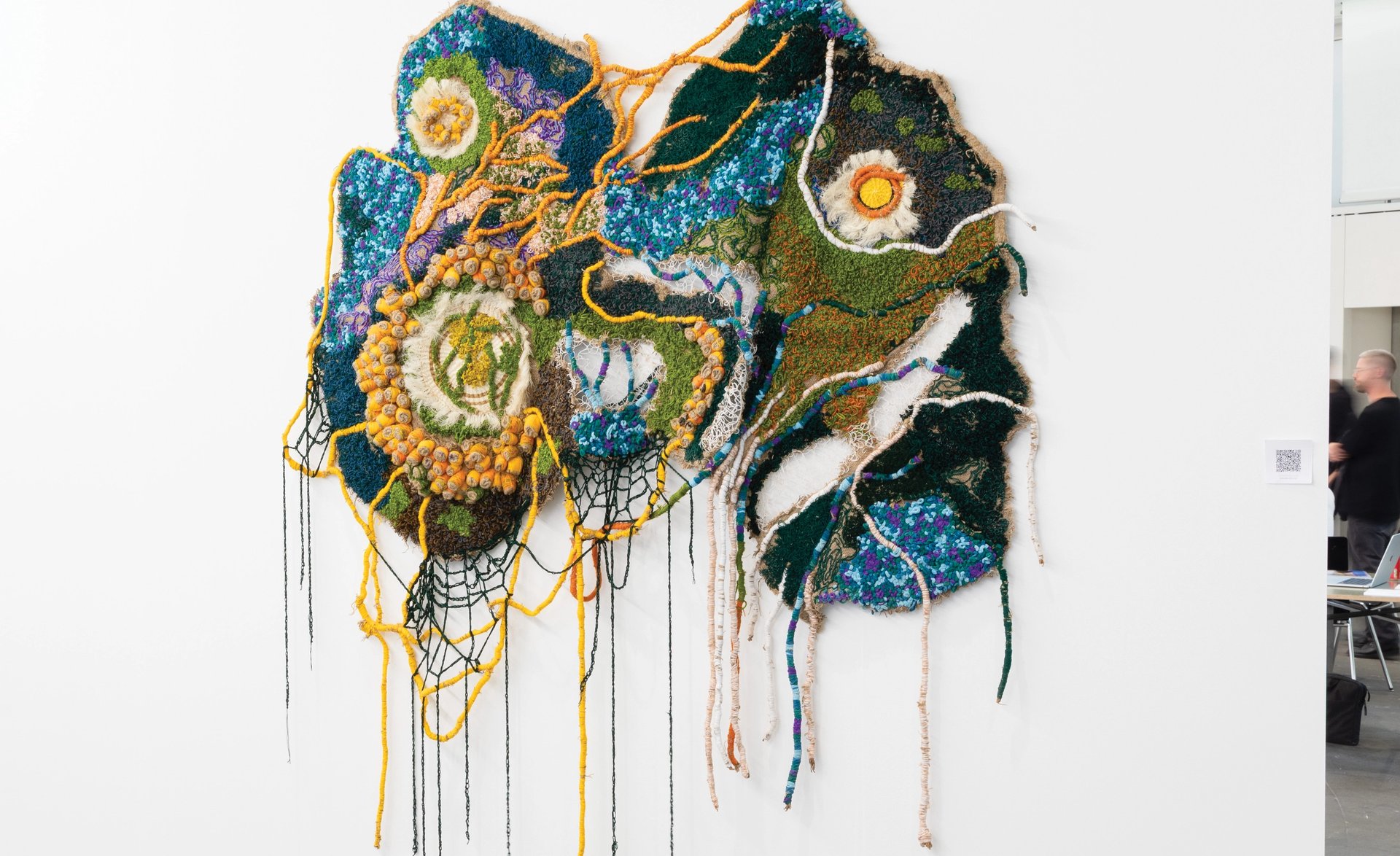
Fiker Solomon, Spiral (2025), Afriart Gallery David Owens
Fiker Solomon
Spiral (2025)
Afriart Gallery
Fiker Solomon makes her works out of supplies she has collected on her journey from Ethiopia, the place she was born, to Uganda, the place she lives—beads, yarns, sisal and extra. The supplies primarily relate to labour, explains the gallery assistant Rim Harrabi, whereas the usage of jute sack is a reference to espresso exportation and in flip colonialism. Solomon works spontaneously and is eager about motion, Harrabi says, however “mockingly she didn’t get her visa to return right here”. Harrabi provides: “For African artists, mobility could be very restricted as a result of we dwell in a colonial state with gatekeepers.” Spiral bought for $10,000.